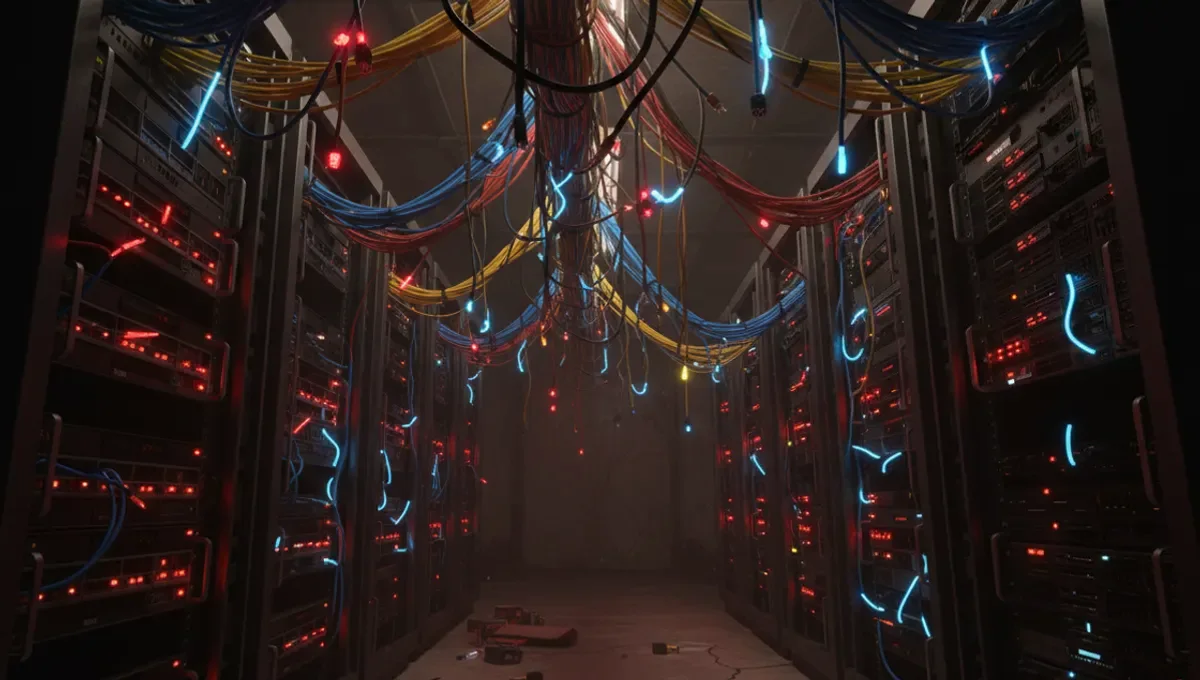
What DDoS Attacks Are and Why They Target Darknet Markets
A distributed denial-of-service attack floods a target with requests from many sources simultaneously, consuming bandwidth and processing power until the server becomes unresponsive. On the darknet, DDoS attacks are launched against markets, forums and other onion services to disrupt operations, extort operators, or sabotage competitors.
Darknet markets are attractive targets because they hold significant value: escrow funds, vendor reputation, and user data. An attacker who takes a market offline can demand payment to stop the attack, or a rival market operator might launch attacks to drive users toward their own platform. The anonymity of Tor makes it difficult to identify attackers or hold them accountable, which lowers the barrier to launching such attacks.
Unlike attacks on conventional websites, DDoS against onion services faces unique constraints. Tor's architecture naturally limits bandwidth, and each connection passes through multiple relays, which means even a large attack consumes more resources than it would against a standard web server. This makes some markets more resilient than others, depending on their infrastructure and relay configuration.
How DDoS Attacks Work on Tor and Onion Services
An attacker sends thousands of requests to an onion address through the Tor network, either by controlling a botnet, recruiting volunteers, or using a DDoS-for-hire service. Each request travels through Tor relays before reaching the target server, which must process and respond to every one. When the volume exceeds the server's capacity, legitimate users cannot connect.
The attack is typically a volumetric flood, where the attacker aims to saturate the target's bandwidth or the Tor exit relays that handle outbound traffic. Some attacks target the application layer, sending requests that appear legitimate but consume disproportionate server resources, such as complex database queries.
Defenders have limited options. They cannot easily block the attacker's IP address because Tor hides it. They cannot rely on conventional DDoS mitigation services because those services cannot access onion addresses. Instead, market operators must scale their infrastructure, use multiple mirrors or backup servers, implement rate-limiting, and configure their Tor hidden service to handle traffic spikes. The best darknet market for resilience is one with distributed infrastructure and experienced system administration, though no market is immune to sustained attacks.
Extortion and Competitive Sabotage Motives
DDoS attacks on darknet markets often serve as extortion. An attacker takes a market offline and contacts the operator with a ransom demand, typically in cryptocurrency. If the operator pays, the attacks stop. If not, the disruption continues, driving users to alternative platforms and damaging the market's reputation.
Competitive sabotage is another motive. When a new best darknet market emerges or an established one gains market share, rivals may launch attacks to disrupt service and push users toward their own platform. This dynamic creates an arms race in which market operators invest in better infrastructure and attackers develop more sophisticated techniques.
Some attacks are ideological or retaliatory. Law-enforcement agencies, security researchers, or vigilante groups have launched attacks against markets to disrupt illegal activity. In other cases, vendors or users who feel wronged by a market's moderation or policies attack it as revenge. The anonymity of Tor means the attacker's identity and motive often remain unclear, leaving market operators and users to speculate about who is behind an outage.
Reality Layer: How Tor Architecture and Attacks Actually Interact
The Tor Project documentation notes that onion services can be targeted by attackers who control or compromise Tor relays, allowing them to observe or manipulate traffic at scale. This matters because it means a sophisticated attacker with resources can launch attacks that are harder to mitigate than simple volumetric floods.
Public law-enforcement press releases and court records from market seizures show that agencies sometimes take markets offline through legal action rather than technical attack, but the operational impact is identical from the user's perspective. This distinction matters because it affects how market operators respond: legal seizure is permanent, while DDoS attacks are typically temporary.
Security-vendor incident reports on ransomware and extortion campaigns document that DDoS-for-hire services operate openly on the darknet and clearnet, with pricing based on attack duration and intensity. This accessibility means that even attackers with limited technical skill can launch damaging attacks, lowering the cost of disruption.
Academic research on onion services has shown that Tor's bandwidth limitations mean even modest attacks can significantly degrade service quality. This matters because it explains why darknet markets often appear slow or unresponsive even when they are not under active attack: the infrastructure is inherently constrained.
Defenses and Mitigation Strategies
Market operators employ several techniques to reduce vulnerability to DDoS attacks:
1. Distributed infrastructure: Running the market on multiple servers or using load balancing spreads traffic and ensures that an attack on one server does not take the entire market offline.
2. Rate limiting and traffic shaping: Restricting the number of requests from a single IP address or connection slows attackers and reduces their ability to overwhelm the server.
3. Redundant Tor hidden services: Operators publish multiple onion addresses for the same market, so users can switch to a backup if one address is attacked.
4. Upstream filtering: Some markets use Tor relay operators or third-party services to filter malicious traffic before it reaches the target server.
5. Rapid response and communication: When an attack occurs, operators post updates on forums or social media to reassure users and prevent panic that could drive them to phishing clones or scam mirrors.
No single defense is foolproof. A determined attacker with sufficient resources can overwhelm most defenses, which is why the best darknet market for stability combines multiple layers of protection and maintains transparent communication with users during outages.
Phishing Clones and Scams During Outages
When a legitimate market goes offline due to DDoS, attackers exploit the downtime by launching phishing clones: fake onion addresses that mimic the real market's interface and steal login credentials, cryptocurrency, or personal data from confused users.
Users searching for an alternative way to access the market during an outage may land on a phishing clone if they do not verify the onion address carefully. The clone's interface is often identical to the real market, making it difficult to spot the difference. Once a user logs in or deposits funds, the attacker captures their credentials or cryptocurrency.
To avoid this trap, users should bookmark the official onion address before an outage occurs and verify any address against PGP-signed announcements from the market's official channels. If a market is offline, the safest approach is to wait for it to return rather than risk a phishing clone. The best darknet market for steroids, LSD, or any other product is only as trustworthy as the address you use to access it, and an outage is exactly when that trust is tested.
Why DDoS Resilience Matters for Users and Market Operators
For users, DDoS attacks create uncertainty and risk. An outage may be temporary, or it may signal that the market is shutting down or has been seized. Users who panic and move their funds to an alternative market during an outage may choose a scam or a less secure platform, resulting in losses. The best darknet market for Australia or any region is one that communicates clearly during outages and maintains infrastructure that minimizes disruption.
For market operators, DDoS resilience is a competitive advantage. Markets that stay online during attacks retain users and vendors, while those that go offline lose market share and reputation. Operators who invest in better infrastructure and security attract more users, which increases their revenue and allows them to invest further in defenses.
The broader ecosystem is affected as well. Repeated outages erode trust in darknet markets as a whole, pushing some users toward less secure alternatives or driving them away entirely. Law-enforcement agencies monitor market uptime and outage patterns as part of their investigation strategies, so operators must balance security with operational transparency.
The key takeaway is that DDoS attacks are not just technical disruptions; they are a form of economic warfare that shapes which markets survive and which fail. Understanding this dynamic helps users make informed decisions about where to conduct transactions and what precautions to take.
Common Questions
Can DDoS attacks on darknet markets be traced back to the attacker?
Tracing a DDoS attacker on Tor is extremely difficult because the attacker's IP address is hidden by the Tor network. Law-enforcement agencies can sometimes identify attackers through other means, such as cryptocurrency transaction analysis or informants, but the attack itself leaves no direct trail. This anonymity is why DDoS extortion is common on the darknet.
How long does a typical DDoS attack on a darknet market last?
Attack duration varies widely. Some attacks last minutes or hours, while others persist for days or weeks. Extortion-motivated attacks often follow a pattern: the attacker takes the market offline, demands payment, and stops the attack once the operator pays. If no payment is made, the attack may continue indefinitely or resume periodically.
Is my data at risk if a darknet market I use is DDoS attacked?
A DDoS attack itself does not compromise user data because it only floods the server with traffic; it does not breach the database. However, during an outage, users may be tricked into accessing phishing clones that do steal data. The safest approach is to verify the onion address and wait for the official market to return online rather than trying alternatives.
Why do some darknet markets stay online longer than others during attacks?
Markets with distributed infrastructure, redundant servers, and experienced system administrators can absorb larger attacks. Markets that use multiple onion addresses, implement rate-limiting, and have backup systems are more resilient. Smaller or poorly maintained markets go offline more quickly because they lack these defenses.
Can Tor Project do anything to stop DDoS attacks on onion services?
The Tor Project has published guidance on DDoS mitigation for onion service operators, but Tor itself cannot prevent attacks because the network is designed to be decentralized and resistant to censorship. Defense is the responsibility of individual service operators. The Tor Project continues to research ways to improve onion service resilience.